BalanceBikeToddler
Balance Bikes for Twins and Siblings
Buying for two children at once: whether identical bikes help or hurt, how to handle a size gap, and the sharing rules that prevent rivalry.
By BalanceBikeToddler Editorial Team ·
Short answer: Buying for two children at once: whether identical bikes help or hurt, how to handle a size gap, and the sharing rules that prevent rivalry.
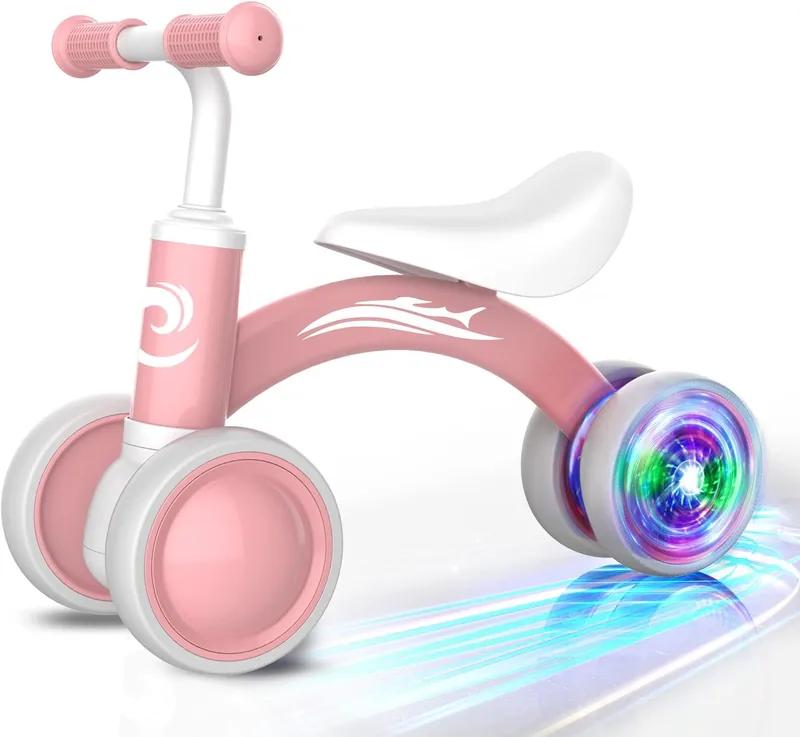
Two children and one bike is a scheduling problem. Two children and two bikes is a geometry problem, and it is the one that gets missed.
Identical or different
The instinct is to buy two of the same, which is the right answer only if the children are the same size. Twins of the same age are frequently not: a height difference of a few centimetres at this age is ordinary, and a few centimetres is exactly the margin between flat-foot and tip-toe.
An identical pair therefore often means one child rides a correctly sized bike and the other rides one that is slightly wrong. The child on the wrong one is the one who loses interest, and the parent usually reads that as temperament rather than fit.
The size gap, handled directly
Measure both children, decide the seat height each one needs, then decide whether one model covers both. That is the only order that works — balance bike size chart has the measurement method, and balance bikes for tall and short kids covers what to do when the two heights do not overlap.
If no single model covers both, the honest options are two different bikes, or one bike now and the second one when the smaller child grows into it. Buying one bike that fits neither is the option to avoid, and it is the most common outcome of buying as a pair.
Sharing, when there is only one bike
If the plan is one bike for two children, the rule that works is fixed turns rather than negotiation. A negotiated turn is a turn that gets argued about, and an argued turn is a bike nobody wants to ride by the time it is their go.
Fixed turns work because the exchange point is predictable. Two things make it fail: a turn that ends in the middle of something interesting, and a child who is allowed to keep the bike past their turn because they are "doing well". Both teach that the rule is negotiable.
The practical costs of two
Two bikes means two of every wear item, and the tyres and bearings wear independently because the children ride differently — balance bike tyre and wheel care is the maintenance page that covers what to check on each. It also means two seat heights to maintain, and the common mistake is adjusting both to the taller child and never moving the smaller one back.
Storage is the other cost. Two balance bikes take the floor space of two, and a hallway with two bikes in it is a hallway where neither gets used — which is why balance bike indoors and in small flats is worth reading before buying the second one.
When one bike is the better answer
If the children are close in size and the space is small, one correctly sized bike plus a fixed-turn rule beats two badly sized ones. The second bike can come later, and by then the first child's height will tell you what the second one needs to be.
Extension reading
Related Reviews
Products Mentioned in This Guide
- Graco SlimFit3 LX 3-in-1 Convertible Car Seat, Slim Car Seat Fits 3 Across, Rear Facing, Forward Facing, to Highback Booster Seat, Perfect for Baby Travel & Gift for New Parents, KunninghamSource-based score, full specs & safety checklist for the Graco SlimFit3 LX 3-in-1 Convertible Car Seat, Slim Car Seat Fits 3 Across, Rear Facing, Forward Facing, to Highback Booster Seat, Perfect for Baby Travel & Gift for New Parents, Kunningham.
- Step2 Whisper Ride II Kids Push Car, Ride-On Car with Seat Belt and Horn, Quick Fold Handle, Stroller Alternative, Toddlers aSource-based score, full specs & safety checklist for the Step2 Whisper Ride II Kids Push Car, Ride-On Car with Seat Belt and Horn, Quick Fold Handle, Stroller Alternative, Toddlers a.
- Baby Trend Expedition 2 in 1 Push/Pull Stroller Wagon w/ Canopy, Choose Between Car Seat Adapter or Built In Seating for 2 Children, Liberty MidnightSource-based score, full specs & safety checklist for the Baby Trend Expedition 2 in 1 Push/Pull Stroller Wagon w/ Canopy, Choose Between Car Seat Adapter or Built In Seating for 2 Children, Liberty Midnight.
Balance bike reference pages
- Balance bike size chartSeat height, wheel diameter and inseam fit, measured per model.
- What buyers sayWhat the buyer-sentiment summaries mention, where they hedge, and what they cannot tell you.
- Which models fit at each ageEach maker's age range, where coverage thins out, and how to turn a birthday into a fit check.
- Stable track balance bikeWheel spacing, steering limiters and the four-wheel trade-off — published by one in thirteen.
- Weight and buildBike weight against child weight, with frame and tire material.
- Safety standards referenceWhat EN 71, ASTM F963 and CPSC actually require of a balance bike.
- Balance bike recall recordCPSC and EU Safety Gate alerts with dates, hazards and remedies.
- Budget & value balance bikeWhat each price tier buys, the frame, tire and weight trade-offs, and the checks that separate a cheap bike worth keeping.
Continue browsing the full guide library.