BalanceBikeToddler
Balance Bikes for Tall and Short Kids
When a child falls outside the average range, seat-height range matters more than any other line on the listing. How to read it, and what to give up.
By BalanceBikeToddler Editorial Team ·
Short answer: When a child falls outside the average range, seat-height range matters more than any other line on the listing. How to read it, and what to give up.
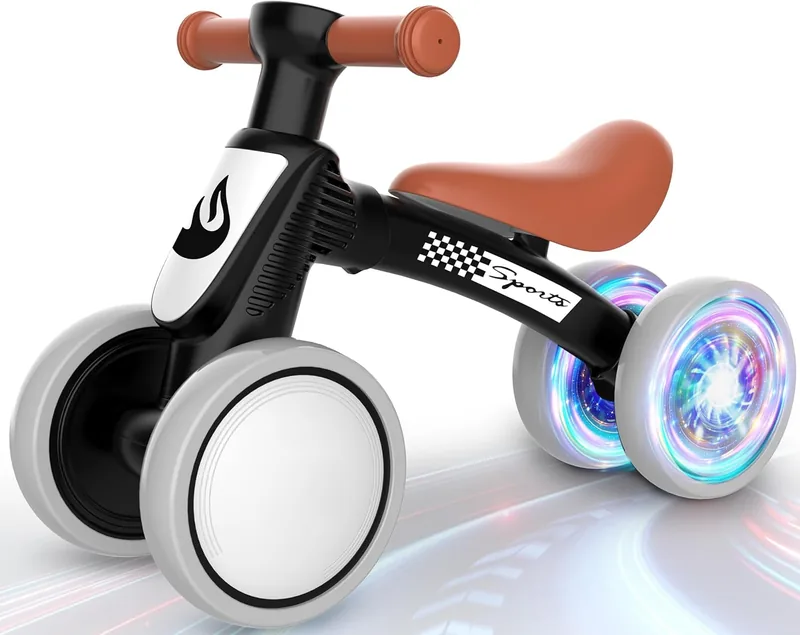
Most balance bike advice is written for the middle of the distribution. A child outside it needs one number more than any other, and the rest of the advice rearranges itself around that.
The number is the seat-height range, not the age band
The flat-foot position is the whole game: seated on the saddle, both feet flat on the ground, knees slightly bent. If that is not reachable, the child cannot stop, cannot start, and cannot catch a wobble. Nothing else on the listing compensates.
So the line to look for is a seat height given as a range — minimum to maximum, in a unit. A single number is only useful if the child happens to sit exactly at it. A range tells you both whether the bike fits today and how long it will fit, which is the question that decides value.
Balance bike size chart turns a barefoot inseam measurement into a target seat height. Measure the child, then find the bike, in that order.
The short child
The binding constraint is the minimum seat height, and it is usually worse than the listings suggest. A bike whose lowest setting is a centimetre or two too high produces a child who rides on the balls of their feet, and that posture is the origin of most "my child won't sit on it" reports.
Two things help. First, a bike that is light enough that the child can pick it up when it does fall — balance bike weight is the relevant page, because a heavy bike at an awkward height is doubly discouraging. Second, accepting that the bike may be a season early: a bike that fits in six months is a bike to buy in six months.
The tall child
Here the constraint is the maximum, and the failure is different: a child who has outgrown the saddle but not the bike will ride with their knees high and their weight back, which looks like poor balance and is actually poor geometry.
The other tall-child problem is bar height, which is often fixed even when the saddle adjusts. A child who has to stoop to reach the bars will not stay on for long. If the bars do not adjust, the bike has a ceiling that the saddle range does not advertise.
What to give up
At either end of the range, expect to give up one of two things: either the lowest price band, because fully adjustable geometry costs more; or the resale, because a bike sized for an unusual child fits fewer second owners. Balance bike resale and hand-me-downs covers how that trade usually resolves.
What should not be given up is the flat-foot position. A bike that is one season too big does not become usable by waiting a month; it becomes usable by waiting the season.
If the child also needs additional postural support rather than just a different height, that is a different question — balance bikes for kids who need support is the page for it.
Extension reading
Related Reviews
Products Mentioned in This Guide
- Graco SlimFit3 LX 3-in-1 Convertible Car Seat, Slim Car Seat Fits 3 Across, Rear Facing, Forward Facing, to Highback Booster Seat, Perfect for Baby Travel & Gift for New Parents, KunninghamSource-based score, full specs & safety checklist for the Graco SlimFit3 LX 3-in-1 Convertible Car Seat, Slim Car Seat Fits 3 Across, Rear Facing, Forward Facing, to Highback Booster Seat, Perfect for Baby Travel & Gift for New Parents, Kunningham.
- Graco Extend2Fit Convertible Car Seat, Rear and Forward Facing Car Seat with Adjustable Extension Panel for Extra Legroom, GrSource-based score, full specs & safety checklist for the Graco Extend2Fit Convertible Car Seat, Rear and Forward Facing Car Seat with Adjustable Extension Panel for Extra Legroom, Gr.
- Step2 Whisper Ride II Kids Push Car, Ride-On Car with Seat Belt and Horn, Quick Fold Handle, Stroller Alternative, Toddlers aSource-based score, full specs & safety checklist for the Step2 Whisper Ride II Kids Push Car, Ride-On Car with Seat Belt and Horn, Quick Fold Handle, Stroller Alternative, Toddlers a.
Balance bike reference pages
- Balance bike size chartSeat height, wheel diameter and inseam fit, measured per model.
- What buyers sayWhat the buyer-sentiment summaries mention, where they hedge, and what they cannot tell you.
- Which models fit at each ageEach maker's age range, where coverage thins out, and how to turn a birthday into a fit check.
- Stable track balance bikeWheel spacing, steering limiters and the four-wheel trade-off — published by one in thirteen.
- Weight and buildBike weight against child weight, with frame and tire material.
- Safety standards referenceWhat EN 71, ASTM F963 and CPSC actually require of a balance bike.
- Balance bike recall recordCPSC and EU Safety Gate alerts with dates, hazards and remedies.
- Budget & value balance bikeWhat each price tier buys, the frame, tire and weight trade-offs, and the checks that separate a cheap bike worth keeping.
Continue browsing the full guide library.