BalanceBikeToddler
Balance Bike Tyre and Wheel Care
Tyre types, what each one needs, and how to tell a worn wheel from a damaged one before it becomes a balance problem for the child.
By BalanceBikeToddler Editorial Team ·
Short answer: Tyre types, what each one needs, and how to tell a worn wheel from a damaged one before it becomes a balance problem for the child.
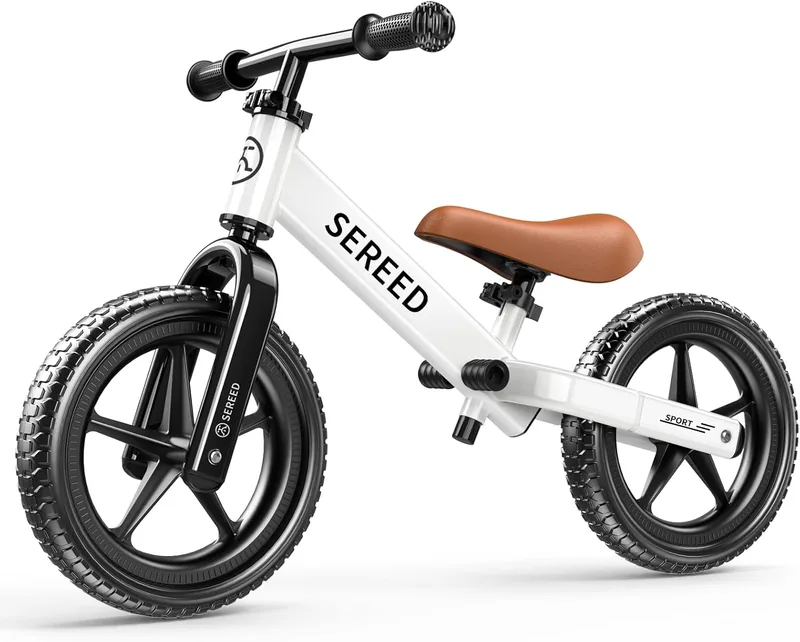
A balance bike's whole feedback loop runs through its wheels. When they stop being round and free, the child stops being able to balance, and the symptom looks like a skill problem.
Three tyre types, three care routines
Pneumatic. Air-filled, with a valve. These need pressure checked, because a soft pneumatic tyre has a larger contact patch and more rolling drag, which reads to the child as the ground pulling sideways. Check by pressing with a thumb at the top of the wheel, not by looking. The listing or the sidewall carries a recommended pressure; if neither does, inflate until the tyre holds its shape under thumb pressure and no further.
Foam and EVA. Solid, no valve, no pressure. Their advantage is that they cannot go flat. Their failure mode is a flat spot: left parked on one spot for a season, the material takes a set and the wheel is no longer round. This cannot be inflated out. It can sometimes be reduced by riding, but a visible flat spot is a wheel that needs replacing.
Plastic or moulded. Common on the smallest bikes. They wear rather than deform, and the wear shows as a loss of tread pattern and a shinier surface. On a hard floor an unworn plastic wheel is already the least grippy option, so worn plastic on a hard floor is the case to watch.
The wheel checks, in order
Spin each wheel with the bike lifted and watch the rim line against the fork. Side-to-side movement is a buckled or badly seated wheel, and the usual cause is an impact rather than wear. Up-and-down movement is a flat spot or a bearing that has collapsed.
Then listen. A wheel that keeps turning and stops smoothly is healthy. One that stops abruptly is dry. One that clicks or grinds has lost a bearing seal, and grit inside a bearing is what turns a cheap wheel into a wheel that has to be replaced rather than serviced.
Finally, check the axle nuts and the wheel-to-fork fit. A wheel that moves in the fork dropouts will steer unpredictably, and this is the one wheel fault that is a safety issue rather than a performance issue.
What a child feels that the owner misses
A wheel that is slightly out of true still rolls. What it does not do is roll straight, and a child learning balance steers constantly to correct for it. The observable sign is not a wobbly bike but a child who keeps stopping, or who keeps looking down at the front wheel.
That is why the wheel check belongs on a schedule rather than on a symptom. Once a month, with the bike lifted, is enough — balance bike maintenance has the full routine this fits into.
When to replace rather than repair
A bearing can be replaced. A foam tyre with a flat spot cannot be corrected, only swapped. A buckled wheel on a bike with spoke wheels can be trued once; a second buckle in the same wheel usually means the rim has taken a permanent set.
If the tyres are being replaced, check the frame at the same time — balance bike frame and fastener checks covers what a season of vibration does to the bolts holding those wheels on.
Extension reading
Related Reviews
Products Mentioned in This Guide
- JOYSTAR 12 14 16 18 Inch Kids Bike for 2-9 Years Girls, Toddler Girls Bike with Training Wheels, Rainbow Bikes, Children BicySource-based score, full specs & safety checklist for the JOYSTAR 12 14 16 18 Inch Kids Bike for 2-9 Years Girls, Toddler Girls Bike with Training Wheels, Rainbow Bikes, Children Bicy.
- JOYSTAR Pluto 12 14 16 18 20 Inch Kids Bike with Light Up Training Wheels, Kids' Bicycle for Boys Girls Age 3-12 Years, Children Bikes, Multiple ColorsSource-based score, full specs & safety checklist for the JOYSTAR Pluto 12 14 16 18 20 Inch Kids Bike with Light Up Training Wheels, Kids' Bicycle for Boys Girls Age 3-12 Years, Children Bikes, Multiple Colors.
- JOYSTAR Kids Bike for Ages 2-12 Years Old Boys Girls, 12-20 Inch BMX Style Kid's Bikes with Training Wheels, Children Bicycle for Kids and Toddler, Multiple ColorsSource-based score, full specs & safety checklist for the JOYSTAR Kids Bike for Ages 2-12 Years Old Boys Girls, 12-20 Inch BMX Style Kid's Bikes with Training Wheels, Children Bicycle for Kids and Toddler, Multiple Colors.
Balance bike reference pages
- Balance bike size chartSeat height, wheel diameter and inseam fit, measured per model.
- What buyers sayWhat the buyer-sentiment summaries mention, where they hedge, and what they cannot tell you.
- Which models fit at each ageEach maker's age range, where coverage thins out, and how to turn a birthday into a fit check.
- Stable track balance bikeWheel spacing, steering limiters and the four-wheel trade-off — published by one in thirteen.
- Weight and buildBike weight against child weight, with frame and tire material.
- Safety standards referenceWhat EN 71, ASTM F963 and CPSC actually require of a balance bike.
- Balance bike recall recordCPSC and EU Safety Gate alerts with dates, hazards and remedies.
- Budget & value balance bikeWhat each price tier buys, the frame, tire and weight trade-offs, and the checks that separate a cheap bike worth keeping.
Continue browsing the full guide library.