BalanceBikeToddler
Riding a Kids Scooter in Wet Weather
Wet pavement changes what a scooter can do long before it looks dangerous. Which surfaces to avoid, and how to adjust the ride rather than cancel it.
By BalanceBikeToddler Editorial Team ·
Short answer: Wet pavement changes what a scooter can do long before it looks dangerous. Which surfaces to avoid, and how to adjust the ride rather than cancel it.
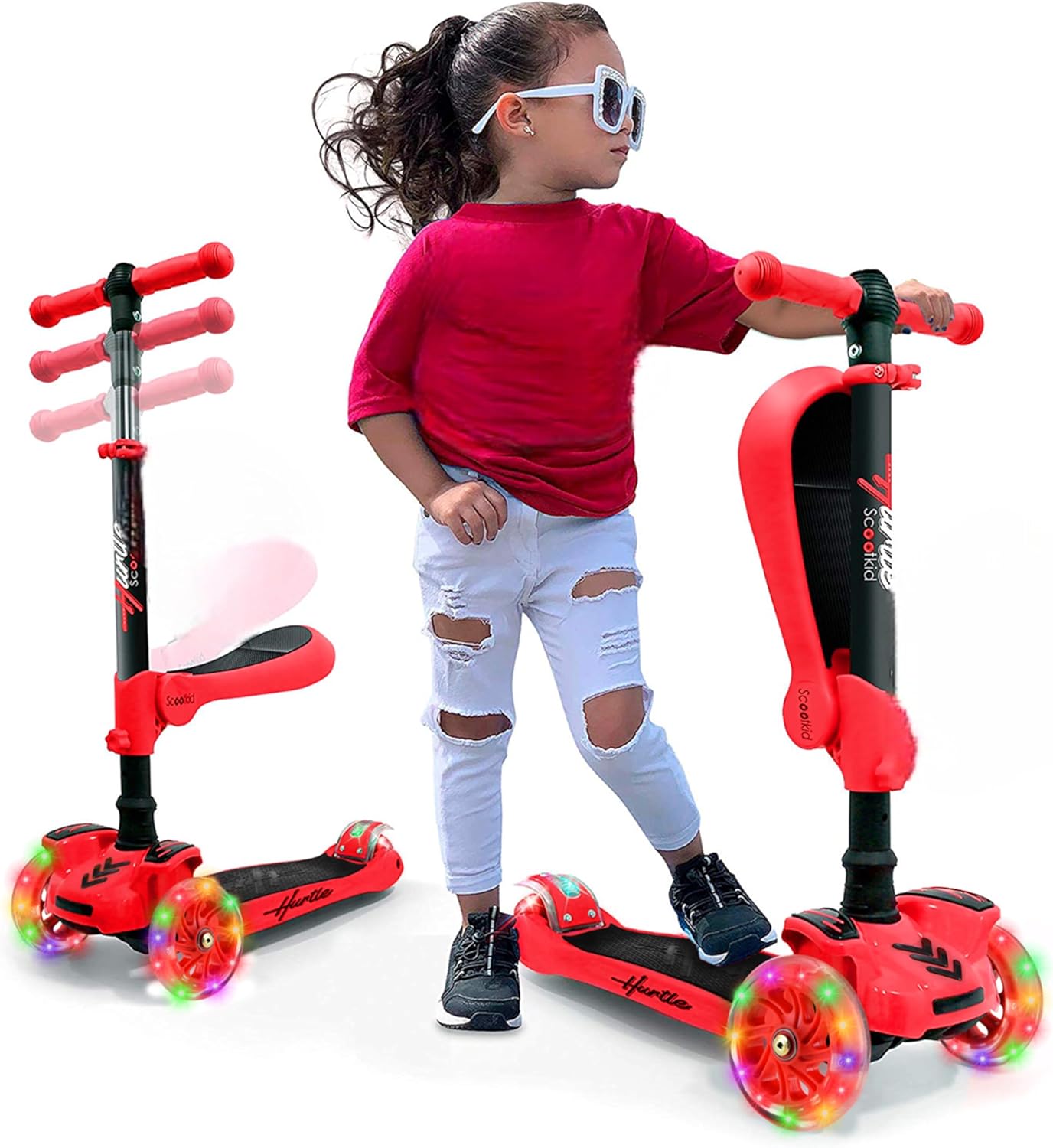
A wet pavement does not make a scooter dangerous in the way ice makes a car dangerous. It removes margin. Everything still works, just with less room for the corrections a child makes constantly and does not know they are making.
The useful question is not "can we ride?" but "what changed, and which of the changes does this child's scooter handle badly?"
What wet actually takes away
Three things, and only one of them is obvious.
Grip at the wheel. This is the obvious one. On a hard plastic or urethane wheel, a thin film of water on smooth stone or painted surface is enough to lose the front end, and it happens on the one surface a child rides on most: the smooth paving in front of a house or a shop.
Braking. A rear fender brake works by friction against the wheel. Water on the wheel reduces that friction, so the stopping distance is longer exactly when the child is least expecting it. A child who brakes the same way they always do will overshoot.
Visibility, which is the one people miss. A wet day is a dim day. A child on a scooter is low — below the height of a car's bonnet — and the scooter is the smallest thing on the path. This is a bigger change than the grip, and it is the one that has nothing to do with the scooter.
Surfaces to rule out, in order
Painted lines, metal drain covers, and the smooth tiles outside shops. These are the surfaces that are slippery when dry-ish and genuinely bad when wet, and they are concentrated exactly where children ride.
Wooden decking and boardwalks next. Wet timber develops a film that is worse than wet stone.
Loose gravel and wet leaves last. These are less about sliding and more about the front wheel washing out sideways, which is a different and less recoverable failure.
Dry concrete and asphalt are fine. So is grass, at the slow speeds a child actually uses.
What to change about the ride
The corrections matter more than the equipment.
Shorten the run. A child who rides the length of a path at speed has no margin to brake. Two shorter passes on a dry-ish stretch is the same amount of fun and a fraction of the exposure.
Brake earlier and softer. Tell the child to press the fender earlier than feels necessary and to press it lightly rather than stomp. Wet braking is progressive; a stomp locks nothing but does pitch the child forward.
Slow down before the surface changes, not on it. Turning or braking on a painted line is the specific combination that puts children down.
What actually helps on the scooter
Wider, softer wheels grip better than narrow hard ones, which is one of the few places where a three-wheel scooter is genuinely better than a two-wheel one — the extra contact patch is doing real work on a damp surface.
A deck with grip tape is worth more than a smooth one, in the wet more than in the dry. If the deck is smooth plastic or bare metal, that is the part to be careful about: a foot that slips on the deck during a push is the most common wet-weather scooter fall there is, and it has nothing to do with the road.
Check the rear fender before a wet-season ride. A fender that has worn thin at the contact point still works in the dry and stops working in the wet, because the friction it needs is the friction it no longer has.
What to check afterwards, every time
Water that goes in comes out badly. After a wet ride, dry the wheels and the fork area rather than leaving the scooter to drip dry, and spin each wheel once. A grinding wheel after a wet ride is water in a bearing, and it is worth dealing with the same day rather than at the end of the season.
The steering column is the other one. Water in the column joint shows up as the wobble described in the steering column check, and it is much easier to catch the same week than the same month.
The honest summary
A scooter in the wet is not a different activity, it is the same activity with less margin. Rule out the four surface types, shorten the run, brake earlier, and dry the wheels afterwards.
The visibility point is the one worth carrying away: on a grey afternoon, a child on a scooter is below the beltline of every car on the road, and the scooter does not have a light. That is a bigger risk than the wet stone, and it is fixed by where you ride rather than by what you ride.
Related Reviews
Products Mentioned in This Guide
- Step2 Push Around Buggy Kids Push Car, Ride On Toy, Stroller Substitute, Includes Seat Belt & Horn, Made of Durable Plastic,Source-based score, full specs & safety checklist for the Step2 Push Around Buggy Kids Push Car, Ride On Toy, Stroller Substitute, Includes Seat Belt & Horn, Made of Durable Plastic,.
- Green Mini 3 Wheel Scooter for Kids – Lean-to-Steer with LED Light-Up Wheels, Adjustable Handlebar, Wide Anti-Slip Deck, SmooSource-based score, full specs & safety checklist for the Green Mini 3 Wheel Scooter for Kids – Lean-to-Steer with LED Light-Up Wheels, Adjustable Handlebar, Wide Anti-Slip Deck, Smoo.
- Step2 Whisper Ride II Kids Push Car, Ride-On Car with Seat Belt and Horn, Quick Fold Handle, Stroller Alternative, Toddlers aSource-based score, full specs & safety checklist for the Step2 Whisper Ride II Kids Push Car, Ride-On Car with Seat Belt and Horn, Quick Fold Handle, Stroller Alternative, Toddlers a.
Continue browsing the full guide library.