BalanceBikeToddler
Scooter Steering Column and Headset
A wobbly scooter can come from the wheel, the axle, or the steering column. How to tell which one you are looking at before you tighten anything.
By BalanceBikeToddler Editorial Team ·
Short answer: A wobbly scooter can come from the wheel, the axle, or the steering column. How to tell which one you are looking at before you tighten anything.
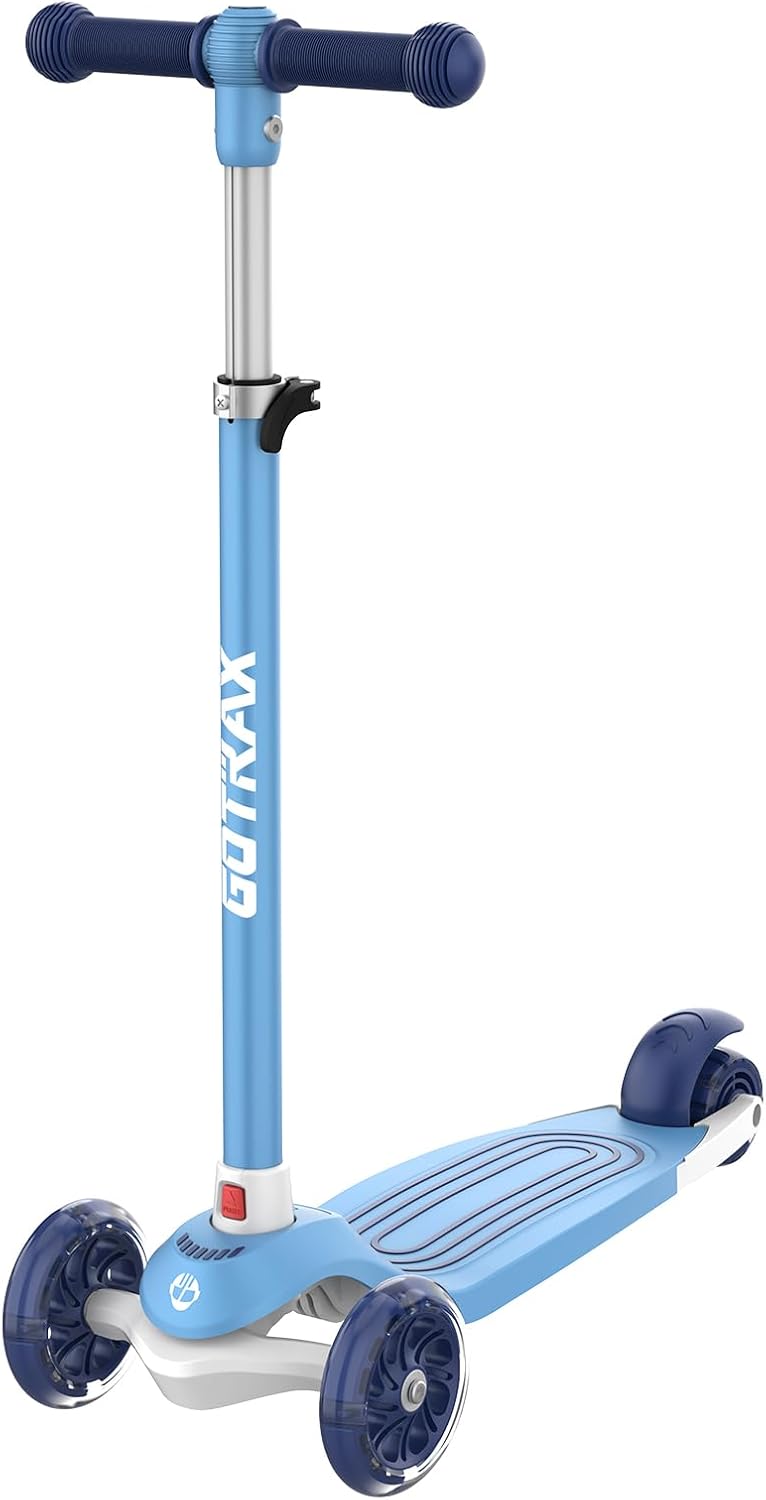
"My scooter wobbles" is the single most common description of a broken scooter, and it covers at least three different faults. Tightening the wrong one is how a small problem becomes a scooter that steers badly.
The three are the wheel, the axle, and the steering column. They feel similar under a child's foot and they are fixed in completely different places.
Why the column is the one people miss
The wheel is obvious: you can see it move. The column is hidden inside the joint where the deck meets the upright, and on most children's scooters that joint is a stack of a clamp, a bearing race, and a compression nut rather than a single bolt.
When that stack comes loose the symptom does not look like a loose part at first. The scooter still rolls. What changes is that the front wheel points slightly to one side while the bar is straight, so the child corrects constantly without knowing why, and the scooter feels unpredictable at low speed — exactly when a beginner is least able to correct it.
The test that separates the three
Put the scooter on a flat surface and hold the deck down with one hand. Turn the bar slowly left and right through its full range.
If the bar turns smoothly but the front wheel lags behind, or arrives at a different angle than the bar, the play is in the column. If the wheel moves with the bar but the whole assembly shifts up and down when you lift the bar, the play is in the headset preload. If the wheel itself rocks side to side on its own axis while the bar stays still, that is the axle.
Only the first two are column problems, and they are fixed by different adjustments.
The order to adjust in
Loosen the clamp that holds the column height before touching anything else. On a scooter where the bar telescopes, the height clamp squeezes the same tube the headset preload acts on, and adjusting preload with the height clamp tight will fight it. Free the tube, set the preload, then re-clamp the height.
If the design has a compression nut on top of the column, a quarter turn is a lot. The correct preload is the least tension that removes the play — the point where the bar turns freely with no side-to-side rock. Overtightening does not just make steering stiff; it loads the bearing race unevenly and the play comes back worse within a few weeks.
If there is no adjustment at all and the column still moves, the bearing race is worn or the clamp has gone out of round. That is a replacement, not an adjustment.
What not to do
Do not solve a column wobble by tightening the wheel axle. It is the nearest bolt, it feels like progress, and it does nothing for play that is above the fork. Worse, an over-tightened axle preloads the wheel bearings and turns a smooth roll into a dragging one, which a small child experiences as the scooter being "too slow" rather than as a fault.
When it is no longer a maintenance question
Play in the column is worth checking before every season change, because that is when the height clamp gets moved and re-tightened by hand. The pass takes a minute.
But there is a line. If the column moves enough that the deck and the upright visibly change angle relative to each other while a child stands on it, the scooter should come out of service until the joint is repaired. A scooter that can fold or twist under a standing child is the one failure mode in this whole category that leads to a fall rather than an annoyance.
If your wobble turns out to be at the wheel instead, that is a different article — a wobbly wheel has its own causes and its own checks.
Related Reviews
Products Mentioned in This Guide
- Dream On Me Aero Travel Umbrella Stroller, One-Hand Quick Fold, 3-Point Safety Harness, Dual Brakes, Adjustable Removable Canopy, Lightweight Compact & Space-Saving, for 6 to 36 Months – BlackSource-based score, full specs & safety checklist for the Dream On Me Aero Travel Umbrella Stroller, One-Hand Quick Fold, 3-Point Safety Harness, Dual Brakes, Adjustable Removable Canopy, Lightweight Compact & Space-Saving, for 6 to 36 Months – Black.
- Graco SlimFit3 LX 3-in-1 Convertible Car Seat, Slim Car Seat Fits 3 Across, Rear Facing, Forward Facing, to Highback Booster Seat, Perfect for Baby Travel & Gift for New Parents, KunninghamSource-based score, full specs & safety checklist for the Graco SlimFit3 LX 3-in-1 Convertible Car Seat, Slim Car Seat Fits 3 Across, Rear Facing, Forward Facing, to Highback Booster Seat, Perfect for Baby Travel & Gift for New Parents, Kunningham.
- Dream On Me Zodiak Baby Playard, Breathable Mesh Sides, Soft Comfortable Mattress, Quick & Easy to Fold with Travel Carry Bag, Compact Space Saving Design - BlackSource-based score, full specs & safety checklist for the Dream On Me Zodiak Baby Playard, Breathable Mesh Sides, Soft Comfortable Mattress, Quick & Easy to Fold with Travel Carry Bag, Compact Space Saving Design - Black.
Continue browsing the full guide library.