BalanceBikeToddler
Ride-On Price Tiers: What Each One Buys
Three price bands and the difference that actually separates them: not the badge, but what the battery and the seat can carry.
By BalanceBikeToddler Editorial Team ·
Short answer: Three price bands and the difference that actually separates them: not the badge, but what the battery and the seat can carry.
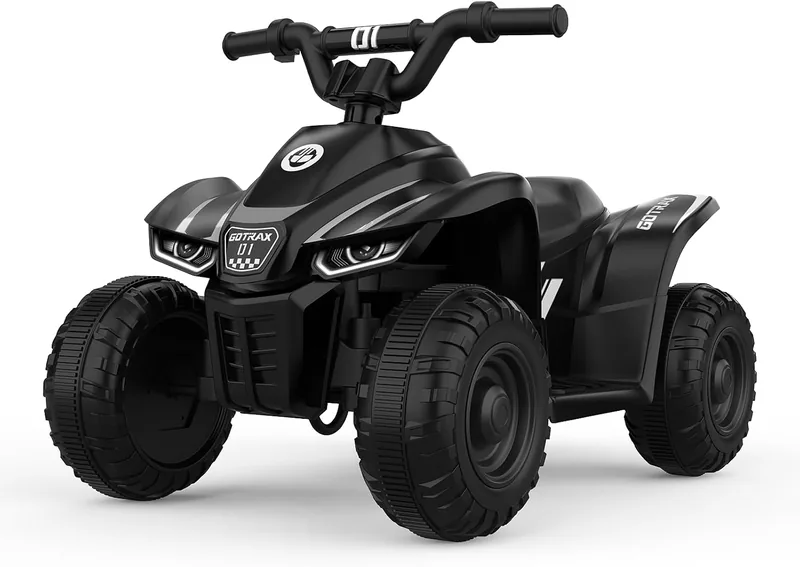
Ride-on cars are sold in three broad bands, and the bands differ in ways that are more useful than the price itself. Understanding what each one buys turns a vague budget question into a decision about a specific child on a specific surface.
The bottom band: a working toy
The lowest band buys a small car that moves. Single seat, modest pack, one or two speeds, sometimes a remote and sometimes not. It is complete for a toddler on a flat driveway, and it is honest about being a toy rather than a vehicle.
What it does not buy is reserve. There is no spare torque for grass, no suspension for uneven ground, and no second seat. A family that only ever uses a paved driveway will never notice.
The middle band: the car stops being marginal
The middle band is where the car starts to handle conditions rather than only flat ground. The pack is larger, the motor has more torque, and a remote becomes standard rather than optional. Suspension appears, and so does a seat shaped to hold a child rather than a bench.
This is the band where most families land, and the reason is not the feature list. It is that the middle band is the first point at which the car can be used on grass without stalling, and grass is what most gardens have.
The middle band is also where two-seat cars begin. That doubles the useful life of the toy in a household with siblings, but it also means the same pack is now moving two children, so the terrain advantage narrows again.
The top band: capability, and its own costs
The top band buys torque, capacity and construction. Larger packs, two seats rated for two children, real suspension, and steering that responds to input rather than merely pointing the car.
Two costs come with it, and both are easy to underestimate. The first is weight: a large car is hard to move, hard to store, and hard to lift over a step. The second is that the car is now fast enough and heavy enough that the supervision question stops being optional. A large car needs space, and it needs an adult who is actually watching.
What does not scale with price
Several things stay constant across all three bands, and they are the ones worth checking whatever the budget.
The manual stays equally important: it states the first charge time, the weight limit and the surfaces the maker intended. Those three lines are not marketing and they do not improve with price.
The seat fit stays a question about a particular child, not a particular car. A well-made seat that is the wrong size is worse than a plain seat that fits.
And the supervision requirement never goes away. No band sells a car that a small child can use unsupervised, and price is not a proxy for that.
Choosing a band
Start from the surface and the child, in that order. A flat driveway and a two year old is the bottom band, and paying more buys capability that will never be used. A garden and a four year old with a sibling is the middle band, because grass and a second seat are the two things that matter there. The top band is for a family with the space and the willingness to supervise a genuinely larger vehicle.
The badge on the front is the least informative thing about any of them.
Related Reviews
Products Mentioned in This Guide
- Graco SlimFit3 LX 3-in-1 Convertible Car Seat, Slim Car Seat Fits 3 Across, Rear Facing, Forward Facing, to Highback Booster Seat, Perfect for Baby Travel & Gift for New Parents, KunninghamSource-based score, full specs & safety checklist for the Graco SlimFit3 LX 3-in-1 Convertible Car Seat, Slim Car Seat Fits 3 Across, Rear Facing, Forward Facing, to Highback Booster Seat, Perfect for Baby Travel & Gift for New Parents, Kunningham.
- ANPABO Licensed Ford F-150 24V 2 Seater Ride on Car for Kids, 4x100W Motors for All-Terrain Electric Car with Parental Remote, Retro Style, 3-Speeds, Large Storage Box, Music Player, Aged 3-8, BlueSource-based score, full specs & safety checklist for the ANPABO Licensed Ford F-150 24V 2 Seater Ride on Car for Kids, 4x100W Motors for All-Terrain Electric Car with Parental Remote, Retro Style, 3-Speeds, Large Storage Box, Music Player, Aged 3-8, Blue.
- First Ride On 24V Ride on Toys for Big Kids, Licensed Ford Bronco Raptor 2 Seater Ride on Cars with Remote Control, Ride on Truck w/ 4-Wheeler Suspension, 3 Speeds, Led Lights, Bluetooth (24V, Pink)Source-based score, full specs & safety checklist for the First Ride On 24V Ride on Toys for Big Kids, Licensed Ford Bronco Raptor 2 Seater Ride on Cars with Remote Control, Ride on Truck w/ 4-Wheeler Suspension, 3 Speeds, Led Lights, Bluetooth (24V, Pink).
Continue browsing the full guide library.