BalanceBikeToddler
Best Lightweight Balance Bike
Weight decides whether a child can recover the bike alone. What the listing publishes, how to read it against the child, and what lightness costs.
By BalanceBikeToddler Editorial Team ·
Short answer: Weight decides whether a child can recover the bike alone. What the listing publishes, how to read it against the child, and what lightness costs.
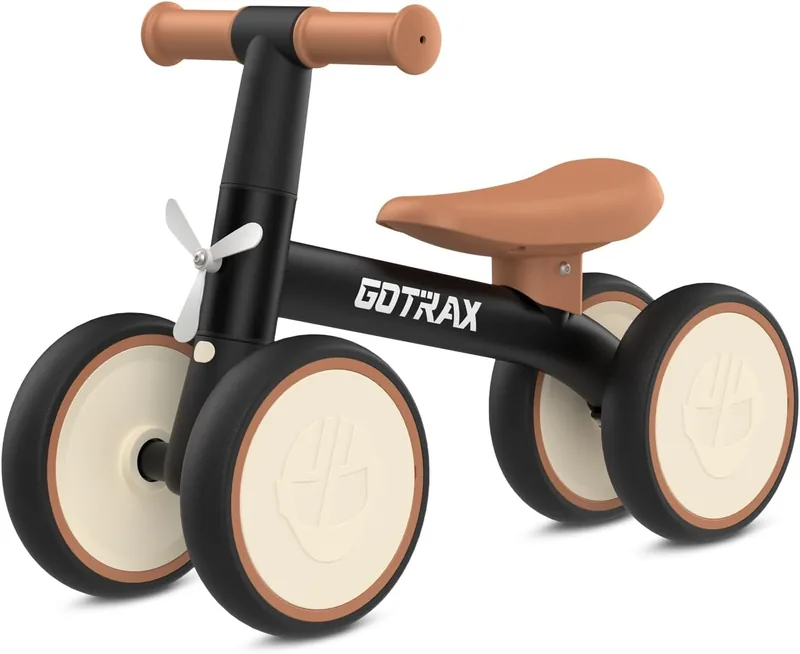
Lightness is the most-quoted balance bike attribute and the least usefully quoted. A number on a listing means nothing until it is compared to the child who has to pick the bike up.
Why weight decides usage more than any spec
Every balance bike session contains a moment where the bike falls. What happens next decides whether the child keeps riding. A child who can lift the bike back upright themselves will do it and carry on. A child who cannot will look for an adult, and after a few of those the bike becomes something that only works when someone is watching.
That is why the useful comparison is not the bike's weight but the bike's weight against the child's. Balance bike weight covers the ratio to aim for; the short version is that a bike a child can lift comfortably is a bike they will ride unsupervised in a garden.
What the listing actually publishes
Most balance bike listings state a weight, and the number is usually the bike without anything added. Three things make that number mean less than it appears:
It may exclude the parts that ship detached. Bars, saddle and wheels often arrive unbolted. The assembled weight is the one that matters.
It says nothing about the distribution. A bike that is light overall but carries its mass high is harder to lift off the ground than a slightly heavier bike with a lower centre. This is also why balance bike stability is about geometry rather than mass.
It is not comparable across materials without the frame size. Wood, steel and aluminium frames at the same seat height do differ, but the catalogue's lightest option at one seat height may be the heaviest at another.
What lightness costs
At a given price, saving weight usually comes out of one of three places: thinner tubing, fewer adjustment mechanisms, or smaller wheels. Each has a consequence.
Thinner tubing flexes, which is fine in a frame designed for it and a problem in one that is not. Fewer adjustments keeps the weight and the price down but reduces how long the bike fits — balance bikes for tall and short kids is where that trade gets decided. Smaller wheels are lighter and also the least able to roll over a kerb, which matters more as the child gets faster.
The one saving that is not worth taking is a hollow or thin-walled frame with a stated maximum weight that the child is already close to. Lightness should come out of geometry design, not out of material margin.
How to judge it in a shop
Lift the bike by the handlebars with one hand. If it comes up easily and hangs level, the mass is reasonably low. If it hangs nose-down or tail-down, the distribution is uneven, and the child will feel that as the bike wanting to fall in one direction.
Then pick it up the way a child would — by the frame or the saddle, not by the bars — and see whether it can be righted one-handed. That is the actual skill the weight has to support.
Where this sits in the short list
For a child at the coasting stage, weight and geometry together are the two criteria that decide the purchase, and best balance bike for a 2-year-old is the age-specific version. Best balance bike 2026 is the cross-model view, and a balance bike under 100 covers what the lowest band trades for its price.
Extension reading
Related Reviews
Products Mentioned in This Guide
- Graco SlimFit3 LX 3-in-1 Convertible Car Seat, Slim Car Seat Fits 3 Across, Rear Facing, Forward Facing, to Highback Booster Seat, Perfect for Baby Travel & Gift for New Parents, KunninghamSource-based score, full specs & safety checklist for the Graco SlimFit3 LX 3-in-1 Convertible Car Seat, Slim Car Seat Fits 3 Across, Rear Facing, Forward Facing, to Highback Booster Seat, Perfect for Baby Travel & Gift for New Parents, Kunningham.
- JOYSTAR Angel Girls Bike for Toddlers and Kids Ages 2-13 Years Old, 12 14 16 18 20 Inch Kids Bike with Training Wheels & Basket, 20 24 Inch Girls Bicycle with Handbrake & KickstandSource-based score, full specs & safety checklist for the JOYSTAR Angel Girls Bike for Toddlers and Kids Ages 2-13 Years Old, 12 14 16 18 20 Inch Kids Bike with Training Wheels & Basket, 20 24 Inch Girls Bicycle with Handbrake & Kickstand.
- Dream On Me Aero Travel Umbrella Stroller, One-Hand Quick Fold, 3-Point Safety Harness, Dual Brakes, Adjustable Removable Canopy, Lightweight Compact & Space-Saving, for 6 to 36 Months – BlackSource-based score, full specs & safety checklist for the Dream On Me Aero Travel Umbrella Stroller, One-Hand Quick Fold, 3-Point Safety Harness, Dual Brakes, Adjustable Removable Canopy, Lightweight Compact & Space-Saving, for 6 to 36 Months – Black.
Balance bike reference pages
- Balance bike size chartSeat height, wheel diameter and inseam fit, measured per model.
- What buyers sayWhat the buyer-sentiment summaries mention, where they hedge, and what they cannot tell you.
- Which models fit at each ageEach maker's age range, where coverage thins out, and how to turn a birthday into a fit check.
- Stable track balance bikeWheel spacing, steering limiters and the four-wheel trade-off — published by one in thirteen.
- Weight and buildBike weight against child weight, with frame and tire material.
- Safety standards referenceWhat EN 71, ASTM F963 and CPSC actually require of a balance bike.
- Balance bike recall recordCPSC and EU Safety Gate alerts with dates, hazards and remedies.
- Budget & value balance bikeWhat each price tier buys, the frame, tire and weight trade-offs, and the checks that separate a cheap bike worth keeping.
Continue browsing the full guide library.