BalanceBikeToddler
Where a Kids Scooter Handles Well
Smooth pavement, cracked sidewalk, gravel: which surfaces a kick scooter is built for, and the ones that turn a ride into a fall.
By BalanceBikeToddler Editorial Team ·
Short answer: Smooth pavement, cracked sidewalk, gravel: which surfaces a kick scooter is built for, and the ones that turn a ride into a fall.
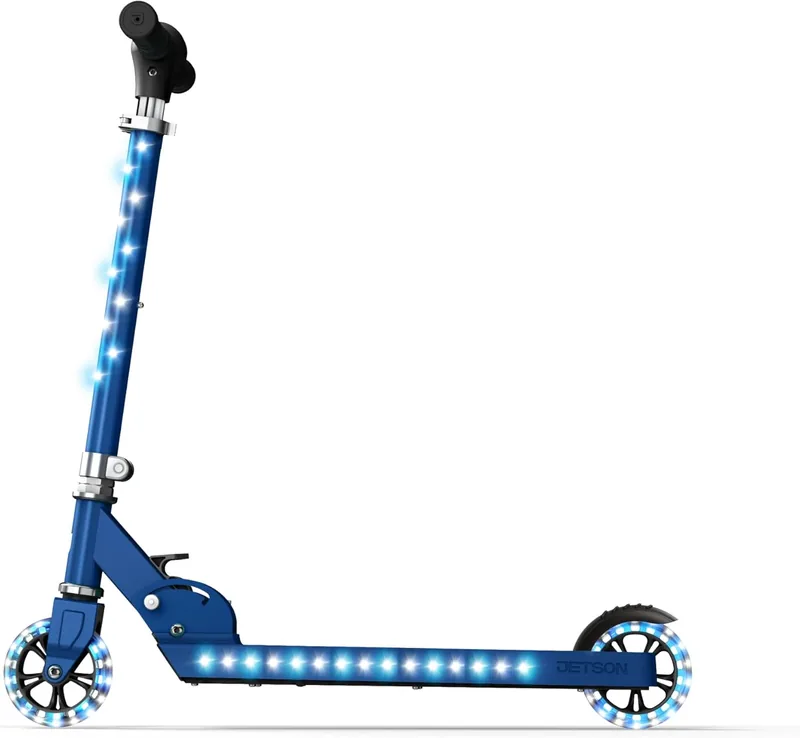
A kick scooter is a machine for smooth ground. That is not a limitation anyone advertises, because the photographs are always taken on smooth ground, and because the scooter will technically roll on almost anything. The question is what happens when it does.
The wheel is the whole story
Small, hard wheels roll over a surface by deforming it slightly less than the surface deforms them. On smooth pavement that is efficient and quiet. On a rough surface the wheel meets each irregularity as a small step, and the scooter loses speed, vibrates, and sometimes stops.
The smaller the wheel, the larger each irregularity is in proportion. That is why the same crack is trivial on a bicycle with large wheels and significant on a scooter with small ones.
Surfaces, from good to bad
Smooth asphalt and poured concrete are what the machine is for. Both are flat, hard and continuous.
Paving slabs are usually acceptable, with one caveat: the joints. A slab that sits a few millimetres proud of its neighbour is a step the wheel has to climb, and a series of them turns a smooth ride into a rattling one. On a scooter with small wheels, proud slabs are felt through the bar, and a child reads that as the scooter being unstable.
Cracked or broken pavement is worse. A crack wide enough to catch a wheel is a stopping event, and the child's momentum carries them forward over the bar. This is the single most common way a scooter ride ends badly, and it has nothing to do with speed or skill.
Loose gravel and sand are the worst common surface. The wheels do not roll so much as plough, and the scooter can slide sideways without the child turning. There is no technique that makes a kick scooter good on gravel; there is only avoiding it.
Grass is a special case. Short, dry grass will roll, slowly and with effort. Long or wet grass hides unevenness and holds the wheels, and the scooter will stop without warning.
The wet-surface problem
Water changes two things. It reduces the grip of a hard wheel on a hard surface, and it makes the fender brake far less effective, because the fender has to squeeze water out from between itself and the wheel before it can slow anything.
Braking distances on a wet pavement are much longer than on a dry one at the same speed. A child who has learned to stop at a particular point in the dry will overshoot that point in the wet, and will not understand why.
Choosing a route
For a child, the useful habit is to pick the route by surface rather than by distance. A slightly longer route on continuous smooth pavement is a better scooter route than a short one with joints, cracks and a gravel patch in the middle.
Walk the route once before the child rides it, and look at the ground rather than at the traffic. The places to note are the ones where the surface changes: a driveway apron that sits proud, a tree root that has lifted the slabs, a patch where the asphalt has crumbled at the edge.
What the child should know
Two instructions cover most of it. Look at the ground ahead rather than at their feet, so a change in surface is seen while there is still time to slow. And get off and carry the scooter over anything that looks like it would stop them, because walking over an obstacle takes three seconds and falling on one takes longer.
Related Reviews
Products Mentioned in This Guide
- Green Mini 3 Wheel Scooter for Kids – Lean-to-Steer with LED Light-Up Wheels, Adjustable Handlebar, Wide Anti-Slip Deck, SmooSource-based score, full specs & safety checklist for the Green Mini 3 Wheel Scooter for Kids – Lean-to-Steer with LED Light-Up Wheels, Adjustable Handlebar, Wide Anti-Slip Deck, Smoo.
- Step2 Whisper Ride II Kids Push Car, Ride-On Car with Seat Belt and Horn, Quick Fold Handle, Stroller Alternative, Toddlers aSource-based score, full specs & safety checklist for the Step2 Whisper Ride II Kids Push Car, Ride-On Car with Seat Belt and Horn, Quick Fold Handle, Stroller Alternative, Toddlers a.
- Aovowheel Electric Scooter for Adults, Folding E Scooter with 250W-500W Motor 16-24 Mph Top Speed, Max 15-60Miles Long Range,6.5''/8.5''/10''/14'' Solid Tires Commuting Scooters, Dual BrakesSource-based score, full specs & safety checklist for the Aovowheel Electric Scooter for Adults, Folding E Scooter with 250W-500W Motor 16-24 Mph Top Speed, Max 15-60Miles Long Range,6.5''/8.5''/10''/14'' Solid Tires Commuting Scooters, Dual Brakes.
Continue browsing the full guide library.