BalanceBikeToddler
Scooter Brakes: Reach Before Power
A brake a small hand or heel cannot reach is not a brake. How to test reach before the first ride, and what to do if it fails.
By BalanceBikeToddler Editorial Team ·
Short answer: A brake a small hand or heel cannot reach is not a brake. How to test reach before the first ride, and what to do if it fails.
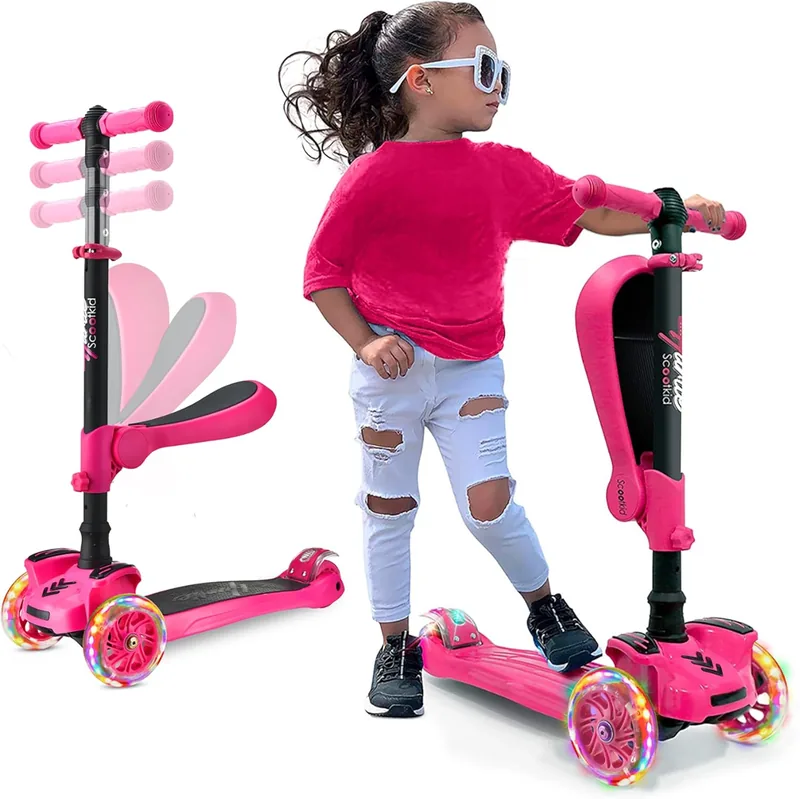
Most scooters for children stop with a rear fender brake: the child presses down on the back of the deck with a heel, the fender bends onto the rear wheel, and the scooter slows. It is a good system. It is also the system most likely to be unusable by the child it was bought for, for a reason nobody checks in the shop.
The reach problem
The brake works only if the child's foot can press it while the child is standing on the deck with their weight distributed and their hands on the bar. That is a different posture from the one a child adopts when an adult asks them to demonstrate the brake in a shop, where they will happily stand on one leg and press with the other.
The real test is the riding posture. Child on the deck, both hands on the bar, both feet on the board. Then ask them to press the brake. If they have to shift their weight off the deck, move a hand, or bend forward to reach it, the brake is out of range and the child cannot use it while riding.
Why the failure is silent
A brake that cannot be reached does not look broken. The part is present, it moves, and an adult can operate it easily with a hand or a bigger foot. Nothing in the listing says "this brake suits riders above a certain height".
The consequence appears later, and in a specific way. A child who cannot brake does not stop; they step off, or run into whatever was in front of them. Both are read afterwards as the child's mistake rather than the scooter's geometry.
What to do if the reach fails
Three options, in order of preference.
Lower the handlebar if the range allows. A lower bar brings the child's posture closer to the brake and often solves the problem outright, at the cost of some future adjustability.
Move the child's stance. Some children stand with their feet too far forward; bringing the back foot closer to the fender shortens the reach. This is a coaching fix rather than a hardware one and it is worth trying first, because it costs nothing.
Change the scooter. If neither works, the scooter is the wrong size, and no amount of practice will change that. A scooter the child cannot stop is not a scooter they should be riding, however well they steer it.
Teaching the brake as a decision
Once reach is solved, the brake needs to become a decision rather than a reflex. The exercise that works is a target: pick a point on the pavement, ask the child to stop at it, and repeat.
Most children initially brake far too early, because pressing the fender feels like committing. That is fine. Early braking is a decision. Late braking, or no braking, is the thing being fixed.
Hand brakes and the front wheel
Some scooters, mostly larger ones, have a hand brake on the bar. If it operates on the front wheel, treat it as a second-stage tool, introduced after the rear is reliable. A front brake applied hard on a small wheel pitches the scooter forward, and the child's instinct is to grip harder.
The check that takes ten seconds
Before every ride in the first few weeks: child on the deck, both hands on the bar, press the brake. If the scooter does not slow, stop the session and fix the reach. It is a cheaper habit than the alternative.
Related Reviews
Products Mentioned in This Guide
- Green Mini 3 Wheel Scooter for Kids – Lean-to-Steer with LED Light-Up Wheels, Adjustable Handlebar, Wide Anti-Slip Deck, SmooSource-based score, full specs & safety checklist for the Green Mini 3 Wheel Scooter for Kids – Lean-to-Steer with LED Light-Up Wheels, Adjustable Handlebar, Wide Anti-Slip Deck, Smoo.
- Aovowheel Electric Scooter for Adults, Folding E Scooter with 250W-500W Motor 16-24 Mph Top Speed, Max 15-60Miles Long Range,6.5''/8.5''/10''/14'' Solid Tires Commuting Scooters, Dual BrakesSource-based score, full specs & safety checklist for the Aovowheel Electric Scooter for Adults, Folding E Scooter with 250W-500W Motor 16-24 Mph Top Speed, Max 15-60Miles Long Range,6.5''/8.5''/10''/14'' Solid Tires Commuting Scooters, Dual Brakes.
- Graco Extend2Fit Convertible Car Seat, Rear and Forward Facing Car Seat with Adjustable Extension Panel for Extra Legroom, GrSource-based score, full specs & safety checklist for the Graco Extend2Fit Convertible Car Seat, Rear and Forward Facing Car Seat with Adjustable Extension Panel for Extra Legroom, Gr.
Continue browsing the full guide library.