BalanceBikeToddler
Storing a Kids Scooter for Winter
Cold and damp do less damage to a scooter than the way it is put away. What actually fails over a winter, and the ten minutes that prevent it.
By BalanceBikeToddler Editorial Team ·
Short answer: Cold and damp do less damage to a scooter than the way it is put away. What actually fails over a winter, and the ten minutes that prevent it.
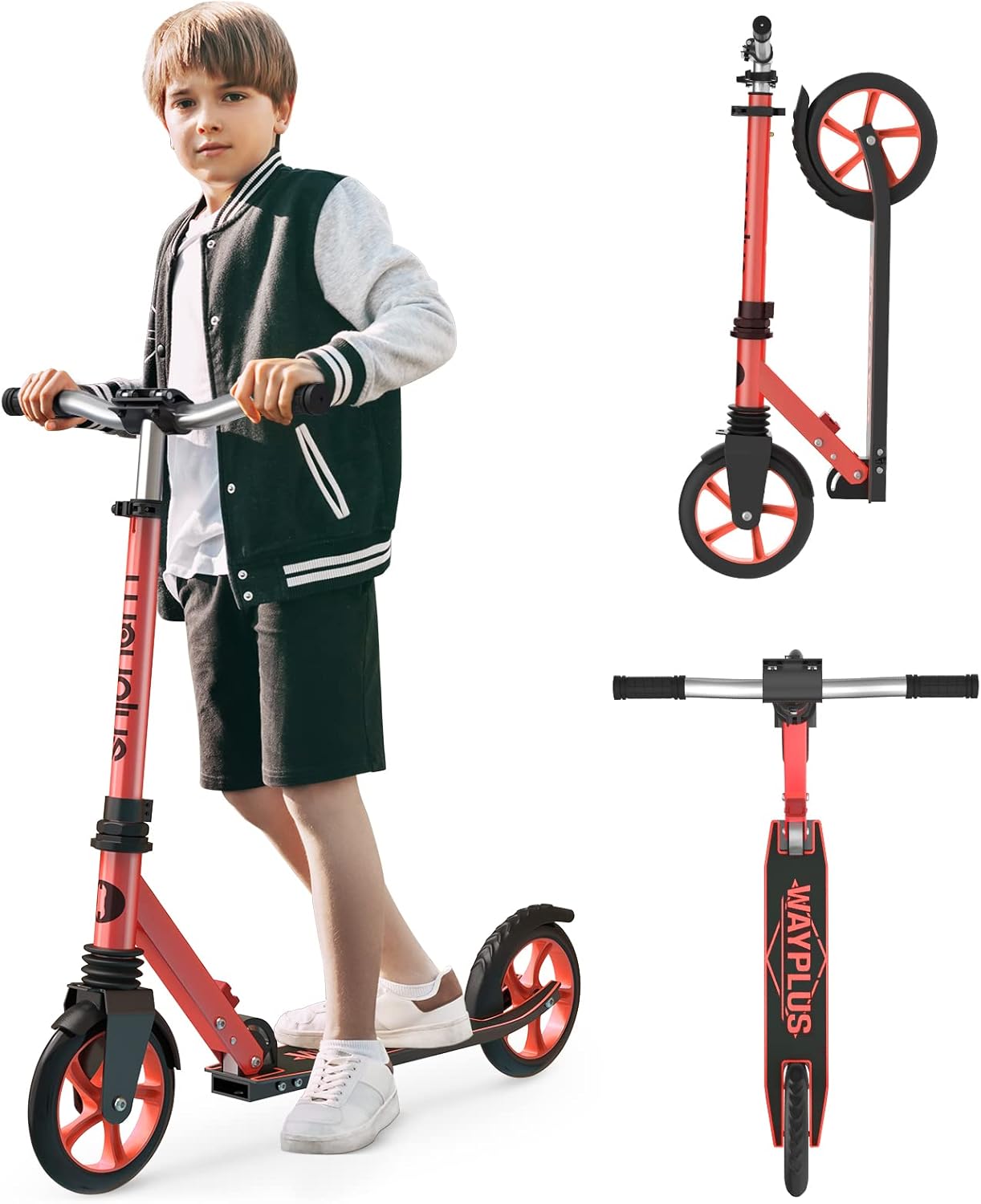
A scooter parked for a winter does not wear out. It seizes, it flats, and it grows a wobble — and all three happen because of where it was left, not because of the cold.
The good news is that the damage is almost entirely preventable, and the work is front-loaded: ten minutes in autumn, nothing until spring.
What actually fails over a winter
Three things, in order of how often they end a scooter's life.
Bearings. Water gets into a wheel bearing and stays there. It does not need to freeze to cause damage; it needs to sit. Over weeks, moisture in a shielded bearing displaces the grease and the bearing corrodes in place. The scooter is not obviously broken in spring — it just rolls badly, and a parent reads that as the child having outgrown it.
Tyres and wheels with a flat spot. A polyurethane wheel left loaded in one position for months takes a set. This matters most on scooters stored standing up, where the whole weight of the deck rests on two contact points.
The folding clamp. A clamp left closed under tension for months is a clamp whose spring or cam stays compressed. It is the part that decides whether the scooter is safe to ride, and it is the part that degrades purely from being parked.
Clean before you store, not after
The instinct is to put it away as it is and deal with it in spring. That is backwards: whatever is on the scooter in autumn spends the winter working on it.
Wipe the deck and the underside, then dry the wheels and the fork area specifically. Grit left on a deck holds moisture against the surface. Mud left around an axle sits directly on the seal.
Do not hose the scooter down. Water pushed at a bearing seal is the exact failure above. A damp cloth and a dry one is the whole method.
Store it lying down, wheels off the load
The single highest-value change is to take the weight off the wheels.
This is where a scooter and a bicycle genuinely differ, and the bicycle article on this site says the opposite for good reason. A bicycle is stored upright on its wheels because its tyres are pneumatic and its rims are large: standing a bicycle loads nothing that takes a set, and hanging a bicycle by one wheel loads the other. A scooter's wheels are solid polyurethane a few centimetres across, so the same instruction would create the exact flat spot it avoids on a bike.
Lying flat on its side is fine for a folding scooter and removes the flat-spot risk entirely. Hanging it by the bar is also fine if the hook holds the bar rather than the deck. What is not fine is standing it upright on its wheels for four months, which is exactly how a scooter gets put in a garage corner.
If it must stand, alternate which end bears the weight every few weeks, or rest it on a block so the wheels are off the floor.
Leave the clamp OPEN
This is the counterintuitive one. A folding clamp stored closed is stored compressed, and the spring that gives the clamp its snap is the thing that fails.
Fold the scooter open — deck and column at riding angle, clamp released — and store it that way if there is room. If there is not, at least leave the clamp lever unlatched so the mechanism is not under load.
The height clamp and the column
Drop the bar to its lowest setting before storing. A telescoped column left extended for months holds the height clamp compressed and puts the most leverage on the joint; lowering it removes both.
Then check the column play once, before storage, using the same test as any other season: hold the deck, turn the bar, and watch whether the front wheel keeps up. Finding play in autumn means fixing it in autumn, when the scooter is in your hands rather than being discovered on the first spring ride.
Spring is a check, not a service
Nothing needs to be done to the scooter over the winter. In spring, before the first ride: spin each wheel and listen, press the rear fender to confirm it still springs back clear of the wheel, and re-check the column play.
A wheel that grinds or a column that rocks is a bearing or a joint that spent the winter wet. Both are cheap now and are not cheap once a child is riding on them.
Storage is the one maintenance task where doing nothing visible is the correct outcome — a scooter that comes out of winter feeling exactly as it went in means the ten minutes in autumn worked.
Related Reviews
Products Mentioned in This Guide
- Step2 Whisper Ride II Kids Push Car, Ride-On Car with Seat Belt and Horn, Quick Fold Handle, Stroller Alternative, Toddlers aSource-based score, full specs & safety checklist for the Step2 Whisper Ride II Kids Push Car, Ride-On Car with Seat Belt and Horn, Quick Fold Handle, Stroller Alternative, Toddlers a.
- Step2 Push Around Buggy Kids Push Car, Ride On Toy, Stroller Substitute, Includes Seat Belt & Horn, Made of Durable Plastic,Source-based score, full specs & safety checklist for the Step2 Push Around Buggy Kids Push Car, Ride On Toy, Stroller Substitute, Includes Seat Belt & Horn, Made of Durable Plastic,.
- Green Mini 3 Wheel Scooter for Kids – Lean-to-Steer with LED Light-Up Wheels, Adjustable Handlebar, Wide Anti-Slip Deck, SmooSource-based score, full specs & safety checklist for the Green Mini 3 Wheel Scooter for Kids – Lean-to-Steer with LED Light-Up Wheels, Adjustable Handlebar, Wide Anti-Slip Deck, Smoo.
Continue browsing the full guide library.