BalanceBikeToddler
A Ride-On Car Under 100: What You Get
The entry tier in one place: what a small budget buys, what it leaves out, and which omission matters most for a first car.
By BalanceBikeToddler Editorial Team ·
Short answer: The entry tier in one place: what a small budget buys, what it leaves out, and which omission matters most for a first car.
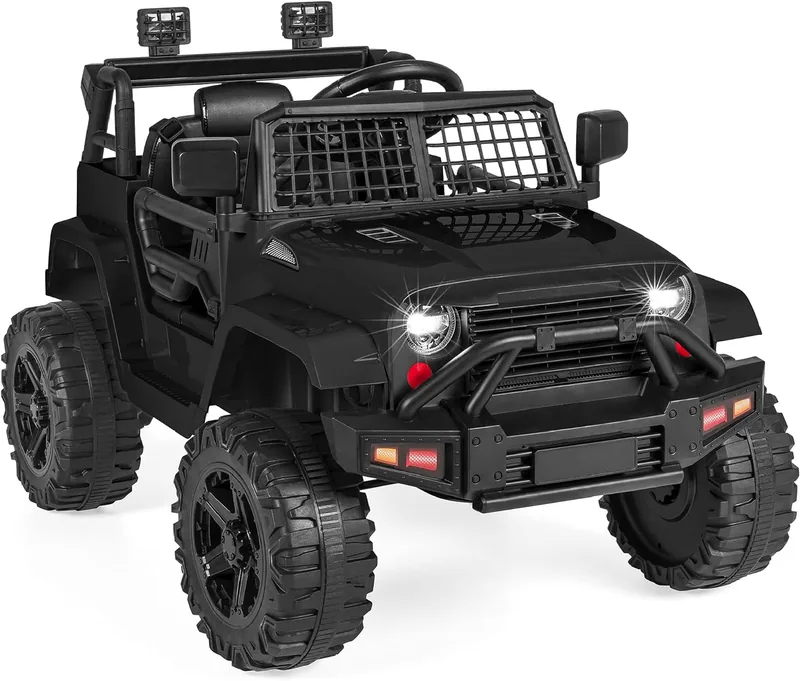
The entry tier of ride-on cars is honest about what it is, as long as you read the box correctly. At this price the car is small, the battery is modest, and the feature list is short. The interesting question is not what is missing, because a great deal is missing. It is which of the missing things actually matters.
What the tier reliably includes
A small single-seat car, a rechargeable pack, a foot pedal, forward and reverse, and some combination of lights, sounds and stickers. Almost all of them steer through the front axle with a wheel or handlebars, and almost all of them run on a smooth surface at a walking pace.
That is a complete toy for a two or three year old. The child sits, presses, moves, and stops. Nothing in the list above is a compromise on that.
What it usually leaves out
Four things, in order of how much they matter.
The first is a parental remote. Some entry cars have one and some do not, and its absence changes the toy for a young child. Without a remote, the adult's only control is physical proximity and the child's own willingness to stop.
The second is a speed lockout. A car with a single speed and no low setting has to be managed entirely by the child's foot, which is a lot to ask of a two year old.
The third is a seat that holds a small body upright. Entry cars often have a moulded bench rather than a shaped seat with a back, and a child who slides is a child who is not steering.
The fourth is suspension. On a smooth driveway it is decoration. On grass it is not.
The omission that matters most
For a first car and a child under three, the remote is the one to prioritise. It is the difference between a toy an adult can supervise from beside the car and a toy an adult has to run behind. Everything else on the list can be worked around: a child can learn a single speed, a bench seat can be padded, and a driveway has no grass on it.
For an older child on a flat surface, the order changes. A remote matters less once a child can steer and stop, and a shaped seat matters less once they can sit still. At that point the single-speed limitation becomes the one worth paying to avoid.
Where the money goes instead
Above this tier, the money buys battery capacity, a second seat, suspension, and the electronics for a remote. Those are real improvements and none of them is decorative. But they are improvements to a car that is already working, which is why the entry tier is a reasonable place to start rather than a false economy.
The one purchase that is a false economy is buying the entry tier for a child who has already outgrown it. A car whose seat the child no longer fits is not cheap at any price.
How to judge a specific listing
Read the listing for four lines: whether a remote is included, whether more than one speed is offered, what the seat looks like from the side, and what surface the maker describes it for. Those four lines decide more about daily use than the badge, the sticker set, or the number of sound effects.
Related Reviews
Products Mentioned in This Guide
- First Ride On 24V Ride on Toys for Big Kids, Licensed Ford Bronco Raptor 2 Seater Ride on Cars with Remote Control, Ride on Truck w/ 4-Wheeler Suspension, 3 Speeds, Led Lights, Bluetooth (24V, Pink)Source-based score, full specs & safety checklist for the First Ride On 24V Ride on Toys for Big Kids, Licensed Ford Bronco Raptor 2 Seater Ride on Cars with Remote Control, Ride on Truck w/ 4-Wheeler Suspension, 3 Speeds, Led Lights, Bluetooth (24V, Pink).
- ANPABO 3-in-1 Electric Push Ride On Car, 12V Kids Ride On Toy w/Remote Control, 360° Spin, 5-Point Safety Belt, Colorful LEDSource-based score, full specs & safety checklist for the ANPABO 3-in-1 Electric Push Ride On Car, 12V Kids Ride On Toy w/Remote Control, 360° Spin, 5-Point Safety Belt, Colorful LED.
- Graco SlimFit3 LX 3-in-1 Convertible Car Seat, Slim Car Seat Fits 3 Across, Rear Facing, Forward Facing, to Highback Booster Seat, Perfect for Baby Travel & Gift for New Parents, KunninghamSource-based score, full specs & safety checklist for the Graco SlimFit3 LX 3-in-1 Convertible Car Seat, Slim Car Seat Fits 3 Across, Rear Facing, Forward Facing, to Highback Booster Seat, Perfect for Baby Travel & Gift for New Parents, Kunningham.
Continue browsing the full guide library.