BalanceBikeToddler
A First Scooter: Why Three Wheels First
A three-wheel scooter stands up on its own, so a small child can concentrate on pushing and steering. Why that order works.
By BalanceBikeToddler Editorial Team ·
Short answer: A three-wheel scooter stands up on its own, so a small child can concentrate on pushing and steering. Why that order works.
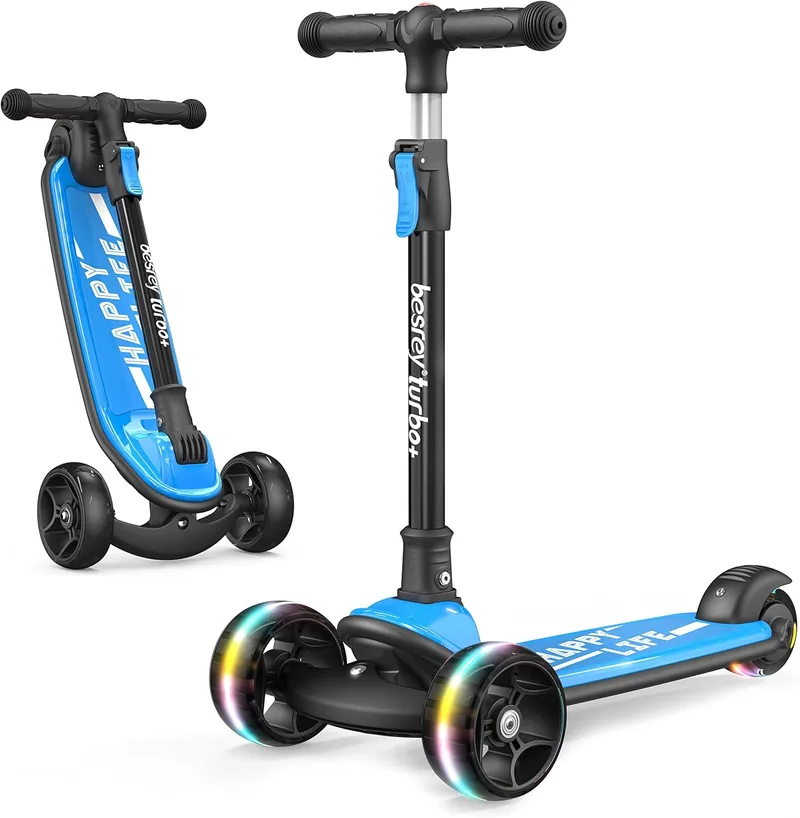
A scooter looks simpler than a balance bike and is not. The child stands on a platform narrower than their feet, holds a bar that moves, and has to push off without falling sideways. Three wheels is what makes that survivable for a two or three year old.
The physics of the first choice
A two-wheel scooter falls over when it stops. It has to be balanced continuously, including at the moment the child steps on, which is precisely the moment they have the least control.
A three-wheel scooter with two wheels at the front stands up on its own. A child can step on, stand still, look around, and step off without the scooter moving at all. That stability is not a lower grade of scooter; it is the thing that lets the child concentrate on the two skills that remain: pushing, and steering.
Lean-to-steer, and why it matters later
Most three-wheel scooters steer by leaning rather than by turning the handlebar. The child shifts their weight and the front wheels follow. It feels odd to an adult and is intuitive to a child, because they are already used to shifting weight to make their body move.
The reason it matters beyond the scooter is that leaning to turn is the same skill a balance bike teaches and the same one a bicycle needs. A child who has spent a year leaning a scooter into turns arrives at a bike already knowing what a lean does.
A handlebar that turns instead of leaning is easier to understand and teaches less. Either is workable; the lean version transfers more.
What to check on the scooter itself
Four things, in order.
The deck height. A low deck means the child's pushing foot starts closer to the ground, which means less bending and more pushing. A high deck makes a small child work hard for very little.
The handlebar range. The bar should sit between the child's waist and their chest, and it should be adjustable through enough range that the scooter lasts more than one season. A bar that only adjusts by a couple of centimetres is a bar that will be too low by next summer.
The brake. Most three-wheel scooters have a rear fender brake that the child presses with their heel. Check that a small foot can reach it while standing on the deck, because a brake that cannot be reached is not one.
The weight. A scooter the child cannot lift is a scooter that an adult carries, which is fine on the way out and tedious on the way back.
The first sessions
Find a flat, smooth, empty stretch. The child stands on the deck with both hands on the bar, and the first goal is not movement at all: it is standing still without wobbling, and stepping off deliberately.
Then one push, and stop. Then two pushes. The scooter will feel slow for a while, and that is the correct pace. A child who is being pushed faster than they can steer is learning to be a passenger.
When three wheels is finished
A child is ready to consider two wheels when they steer by leaning without thinking about it, stop where they intend to, and step off without looking down. That is usually somewhere between four and seven, and it depends far more on practice than on age.
Related Reviews
Products Mentioned in This Guide
- Green Mini 3 Wheel Scooter for Kids – Lean-to-Steer with LED Light-Up Wheels, Adjustable Handlebar, Wide Anti-Slip Deck, SmooSource-based score, full specs & safety checklist for the Green Mini 3 Wheel Scooter for Kids – Lean-to-Steer with LED Light-Up Wheels, Adjustable Handlebar, Wide Anti-Slip Deck, Smoo.
- Retrospec Cricket Baby Balance Bike, 4-Wheel Ride-On Toy for Ages 12-24 Months – First Bike & Toddler Bike for 1 Year Old Boys & Girls, First Birthday GiftSource-based score, full specs & safety checklist for the Retrospec Cricket Baby Balance Bike, 4-Wheel Ride-On Toy for Ages 12-24 Months – First Bike & Toddler Bike for 1 Year Old Boys & Girls, First Birthday Gift.
- Hurtle 3-Wheeled Scooter for Kids - Wheel LED Lights, Adjustable Lean-to-Steer Handlebar, and Foldable Seat - Sit or Stand RiSource-based score, full specs & safety checklist for the Hurtle 3-Wheeled Scooter for Kids - Wheel LED Lights, Adjustable Lean-to-Steer Handlebar, and Foldable Seat - Sit or Stand Ri.
Balance bike reference pages
- Balance bike size chartSeat height, wheel diameter and inseam fit, measured per model.
- What buyers sayWhat the buyer-sentiment summaries mention, where they hedge, and what they cannot tell you.
- Which models fit at each ageEach maker's age range, where coverage thins out, and how to turn a birthday into a fit check.
- Stable track balance bikeWheel spacing, steering limiters and the four-wheel trade-off — published by one in thirteen.
- Weight and buildBike weight against child weight, with frame and tire material.
- Safety standards referenceWhat EN 71, ASTM F963 and CPSC actually require of a balance bike.
- Balance bike recall recordCPSC and EU Safety Gate alerts with dates, hazards and remedies.
- Budget & value balance bikeWhat each price tier buys, the frame, tire and weight trade-offs, and the checks that separate a cheap bike worth keeping.
Continue browsing the full guide library.