BalanceBikeToddler
6V, 12V and 24V Ride-Ons: What Differs
The voltage on the box describes a battery pack, not a child. What each tier changes about speed, terrain and run time.
By BalanceBikeToddler Editorial Team ·
Short answer: The voltage on the box describes a battery pack, not a child. What each tier changes about speed, terrain and run time.
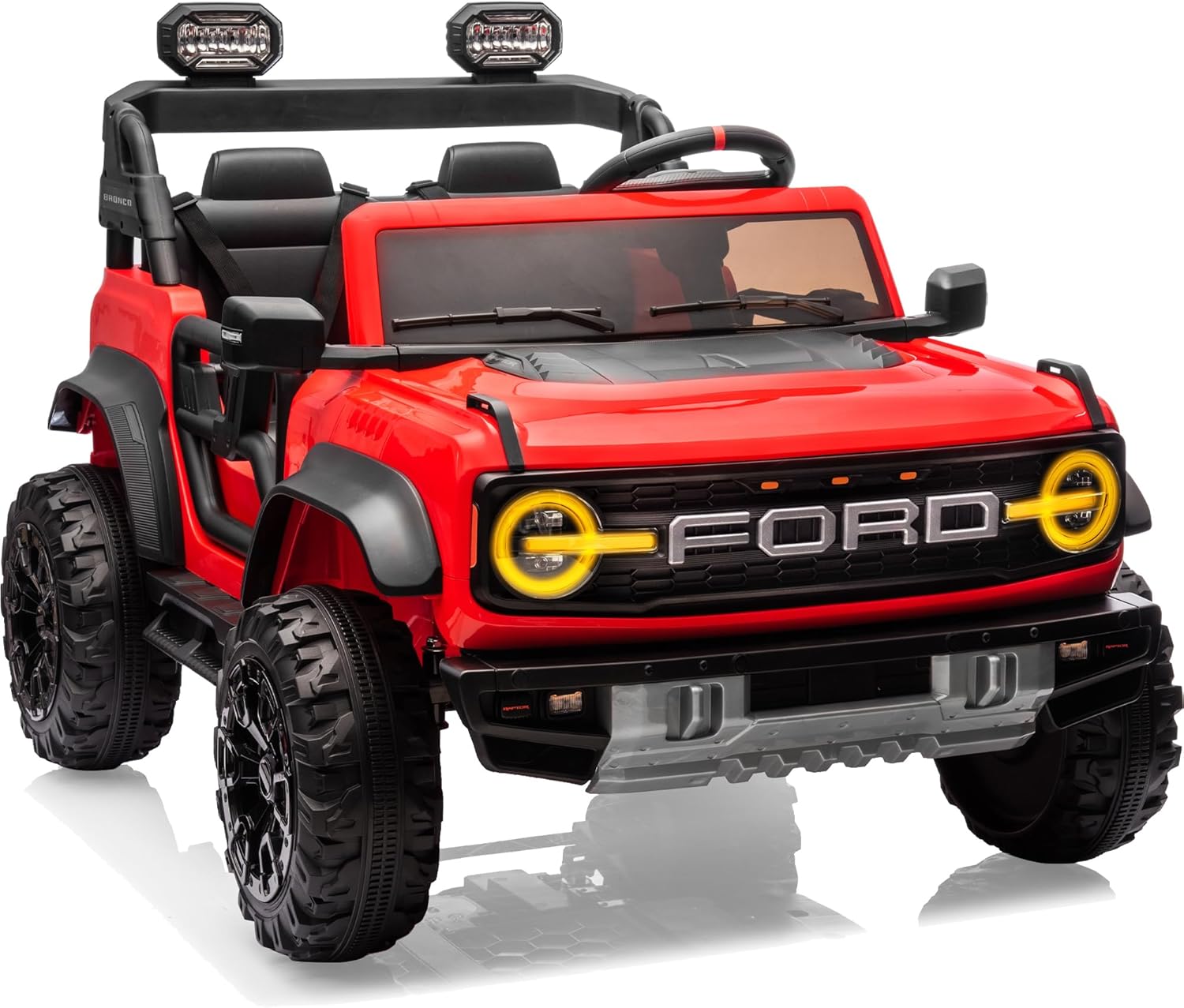
Voltage is the most quoted number on a ride-on box and the least understood. It describes a battery pack. It does not describe a child, a child's age, or how much fun the toy is. What it does describe is how much work the motor can be asked to do before the pack runs down, and that has three visible consequences.
The three tiers, in plain terms
A 6V car is a small, light vehicle with a short run time and a gentle top speed. It suits a flat, smooth surface and a child who is still learning that pressing the pedal makes the car move.
A 12V car is the middle of the market. It usually carries a slightly larger motor, a longer run time, and enough torque to move on grass as well as pavement, at a walking to slow-jogging pace.
A 24V car is the larger end. The extra voltage buys torque more than it buys speed: it is what lets a heavier car with two seats and two children climb a gentle slope or cross a lawn without stalling.
What voltage does not tell you
It does not tell you the top speed. Two cars of the same voltage can ship with different gearing and different speed settings, so the voltage is a weak predictor of how fast a particular model goes.
It does not tell you the run time either. Run time depends on the pack's capacity, the weight it is moving, and the surface. A large 24V car on grass can run down sooner than a small 12V car on a smooth driveway.
And it says nothing about safety features. A 24V car can have a lockout, a soft start and a remote; a 6V car can have none of them. Those are separate decisions, made by the maker, and they matter more for a young child than the voltage does.
Read the voltage against the terrain
The useful question is not which voltage is better but which voltage suits the ground the car will actually be used on.
A flat driveway or a paved patio asks very little of the motor. A 6V or 12V car handles it. Grass is a different problem: it is soft, it is uneven, and a wheel has to push through it rather than roll across it. That is where the higher tiers earn their price. If the family garden is the main venue, the lower tier will spend its life stalling at the first patch of longer grass.
Slopes are the same story with weight added. A gentle slope plus two children plus a 24V pack is a reasonable combination. The same slope with a 12V car and two children is a car that stops halfway up.
Match the voltage to the child's stage
A child in their second or third year does not need torque. They need a low top speed and an adult who can stop the car, and both of those are available in the smallest tier.
Torque becomes relevant when the child is driving themselves over ground that resists, which in practice means an older and heavier child, often in a garden rather than on a driveway. That is also the point at which the higher tier starts to make sense.
The short version
Voltage is a capability rating for the battery and motor, not a ranking. Choose the smallest tier that can move the child over the surface the car will really be used on, then spend the remaining attention on the seat, the speed settings and the remote.
Related Reviews
Products Mentioned in This Guide
- Graco SlimFit3 LX 3-in-1 Convertible Car Seat, Slim Car Seat Fits 3 Across, Rear Facing, Forward Facing, to Highback Booster Seat, Perfect for Baby Travel & Gift for New Parents, KunninghamSource-based score, full specs & safety checklist for the Graco SlimFit3 LX 3-in-1 Convertible Car Seat, Slim Car Seat Fits 3 Across, Rear Facing, Forward Facing, to Highback Booster Seat, Perfect for Baby Travel & Gift for New Parents, Kunningham.
- ANPABO 3-in-1 Electric Push Ride On Car, 12V Kids Ride On Toy w/Remote Control, 360° Spin, 5-Point Safety Belt, Colorful LEDSource-based score, full specs & safety checklist for the ANPABO 3-in-1 Electric Push Ride On Car, 12V Kids Ride On Toy w/Remote Control, 360° Spin, 5-Point Safety Belt, Colorful LED.
- Step2 Whisper Ride II Kids Push Car, Ride-On Car with Seat Belt and Horn, Quick Fold Handle, Stroller Alternative, Toddlers aSource-based score, full specs & safety checklist for the Step2 Whisper Ride II Kids Push Car, Ride-On Car with Seat Belt and Horn, Quick Fold Handle, Stroller Alternative, Toddlers a.
Continue browsing the full guide library.