BalanceBikeToddler
Best Balance Bike for a 1-Year-Old: Guide
By BalanceBikeToddler Editorial Team ·
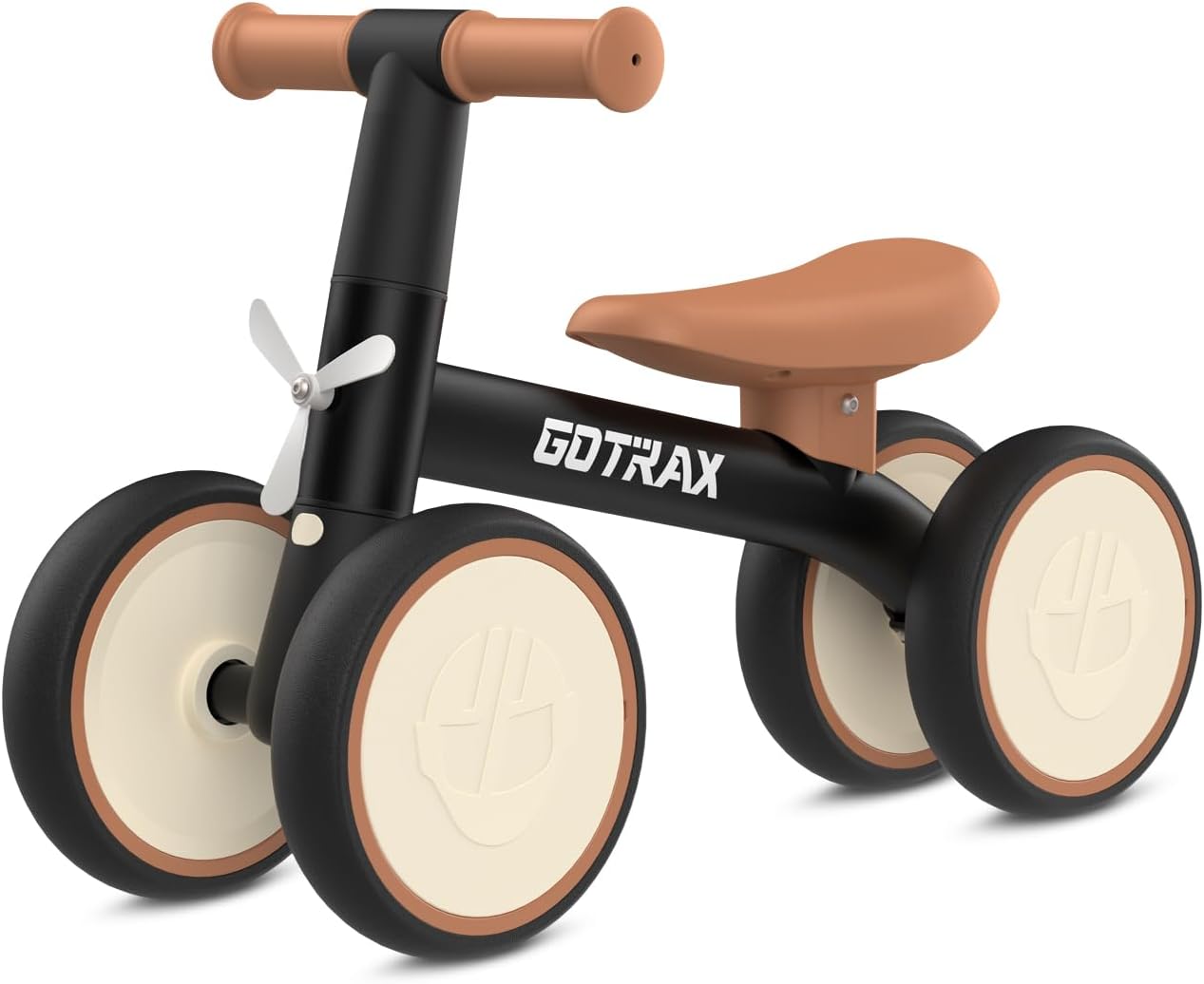
For toddlers around 1 year old (approx. 10–24 months) who are just learning to stand and walk, a Baby Balance Bike (1-year-old ride-on) is an ideal tool for developing motor coordination, vestibular sense, and balance. Unlike two-wheeled balance bikes for older kids, 1-year-olds have developing vestibular systems and muscle strength, requiring specific design and safety standards.
Four Key Buying Factors for 1-Year-Old Balance Bikes
Multi-Wheel Support & High Stability (3 or 4 Wheels)
Design Requirement: Two-wheeled bikes are strictly not recommended for 1-year-old beginners. Choose a four-wheel or wide three-wheel design to provide lateral support and prevent side tip-overs before the child masters balance.
Anti-Oversteer (Steering Limit Design)
Safety Standard: The handlebar must feature a 135° steering limit to prevent side flips. Without a limiter, sharp turns or sudden pulls on the handlebar can lock the front wheel and cause the bike and child to pitch forward.
Ultra-Lightweight & Child-Safe Materials
Weight Limit: Keep the total bike weight under 2 kg (4.4 lbs) or within 30% of the child's body weight. An overly heavy bike can press against the child during a fall or discourage them from riding due to difficulty pushing it.
Safety Details: The frame should have rounded edges without sharp corners, non-toxic soft rubber handlebar grips, and fully recessed screws.
Low Standover Height & Silent Wheels
Seat Height: Minimum seat height should be between 20–25 cm (7.8–9.8 in), ensuring both of the toddler's feet can rest completely flat and securely on the ground.
Tire Choice: Opt for EVA foam silent wheels. They are airless, offer steady grip, and suit indoor hardwood floors or flat paved surfaces without leaving scratches.
Safety Gear & Accessories
Establish safe riding habits right from day one, even indoors or in small play areas:
Helmet: Use an ultra-lightweight, child-specific helmet certified by safety standards (such as CPSC or CE).
Footwear: Always wear supportive, non-slip closed-toe sneakers. Never let toddlers ride barefoot, in socks, or wearing open-toe sandals.
A 3-Step Guided Learning Method
Phase 1: Walk & Explore
Beginners usually do not sit down right away; instead, they stand over the frame and push the bike forward while walking. Do not force them to sit—let them build confidence at their own pace.
Phase 2: Stride & Glide
Once comfortable with the bike's stability, guide the toddler to sit on the saddle and push forward using alternating foot strides. This phase builds the muscle memory of "pushing = moving forward."
Phase 3: Turn & Stop
In a flat, obstacle-free space, encourage the toddler to steer gently and lean slightly to turn, while learning to stop smoothly by placing both feet firmly on the ground.
For the latest head-to-head, see our best balance bike 2026 roundup.
Related Reviews
Products Mentioned in This Guide
- Graco SlimFit3 LX 3-in-1 Convertible Car Seat, Slim Car Seat Fits 3 Across, Rear Facing, Forward Facing, to Highback Booster Seat, Perfect for Baby Travel & Gift for New Parents, KunninghamSource-based score, full specs & safety checklist for the Graco SlimFit3 LX 3-in-1 Convertible Car Seat, Slim Car Seat Fits 3 Across, Rear Facing, Forward Facing, to Highback Booster Seat, Perfect for Baby Travel & Gift for New Parents, Kunningham.
- Green Mini 3 Wheel Scooter for Kids – Lean-to-Steer with LED Light-Up Wheels, Adjustable Handlebar, Wide Anti-Slip Deck, SmooSource-based score, full specs & safety checklist for the Green Mini 3 Wheel Scooter for Kids – Lean-to-Steer with LED Light-Up Wheels, Adjustable Handlebar, Wide Anti-Slip Deck, Smoo.
- Step2 Push Around Buggy Kids Push Car, Ride On Toy, Stroller Substitute, Includes Seat Belt & Horn, Made of Durable Plastic,Source-based score, full specs & safety checklist for the Step2 Push Around Buggy Kids Push Car, Ride On Toy, Stroller Substitute, Includes Seat Belt & Horn, Made of Durable Plastic,.
Balance bike reference pages
- Balance bike size chartSeat height, wheel diameter and inseam fit, measured per model.
- What buyers sayWhat the buyer-sentiment summaries mention, where they hedge, and what they cannot tell you.
- Which models fit at each ageEach maker's age range, where coverage thins out, and how to turn a birthday into a fit check.
- Stable track balance bikeWheel spacing, steering limiters and the four-wheel trade-off — published by one in thirteen.
- Weight and buildBike weight against child weight, with frame and tire material.
- Safety standards referenceWhat EN 71, ASTM F963 and CPSC actually require of a balance bike.
- Balance bike recall recordCPSC and EU Safety Gate alerts with dates, hazards and remedies.
- Budget & value balance bikeWhat each price tier buys, the frame, tire and weight trade-offs, and the checks that separate a cheap bike worth keeping.
Continue browsing the full guide library.